Sandbay Care – Urgent Care in Clearwater and Pinellas Park Florida 33756 and 33781

Choosing a family practice in Clearwater can make everyday healthcare feel more connected, convenient, and personal. From preventive checkups to support during unexpected health concerns, a trusted primary care team can help individuals and families make informed decisions as their healthcare needs change over time.

If you are searching for Family Practice Clearwater, it can be helpful to look beyond the location of a medical office. A good family practice should provide a reliable starting point for routine healthcare, preventive care, ongoing health concerns, and guidance when another type of medical care may be needed.

(SELF-LINK: anchor text “Family Practice Clearwater” → link về chính bài viết này)

For local patients, SandBay Care provides Family and Urgent Care services, with primary care available at its locations in Clearwater and Pinellas Park. The practice also offers telemedicine and in-house laboratory services, giving patients access to several types of care within the same healthcare organization. Sandbay Care

(LINK TRANG CHỦ: anchor text “SandBay Care” → Homepage)


What Family Practice Means for Clearwater Families

Family practice brings many everyday health needs into one ongoing relationship. Rather than treating each appointment as an isolated event, a family physician or primary care provider can learn your health history, understand what matters to you, and help coordinate care as your needs change.

In Clearwater, that continuity can be especially helpful for busy households balancing work, school, caregiving, outdoor activities, and everyday responsibilities.

A Continuing Relationship, Not Just an Appointment

A meaningful family practice relationship develops over time.

At an initial visit, a clinician may review your current concerns, past illnesses, medications, family health history, and preventive care needs. Later visits can build on that information.

When a healthcare provider already understands your baseline health, it may be easier to recognize when a symptom is new, when a health pattern has changed, or when a treatment plan may need to be reviewed.

This is one reason primary care can become an important part of long-term healthcare.

At SandBay Care, primary care is offered at all of its locations, with the practice emphasizing regular checkups for prevention and early detection. The clinic also provides annual medical exams and other routine services that can support patients as their healthcare needs develop over time. Sandbay Care

(LINK TRANG SERVICES: anchor text “primary care services” → Services Page)

Continuity can also make conversations more comfortable. Some people find it difficult to discuss sensitive subjects, including mental health, sleep, sexual health, or substance use, during a first appointment.

Familiarity does not replace professional judgment, but a respectful relationship can help patients feel more prepared to ask questions and share relevant details.

Family practices commonly care for patients across several life stages. A parent might schedule a child’s wellness visit, ask about a teenager’s health, and discuss their own blood pressure or preventive care during the same period of life.

The practice may not address every concern in one appointment, and some situations may require a separate visit or specialist care. However, having a consistent primary care home can help families understand where to start and how to follow up.

The most useful measure of continuity is not simply how long a patient has been seeing a particular clinician. It is whether the care team communicates clearly, records important information, and helps patients understand the next steps.

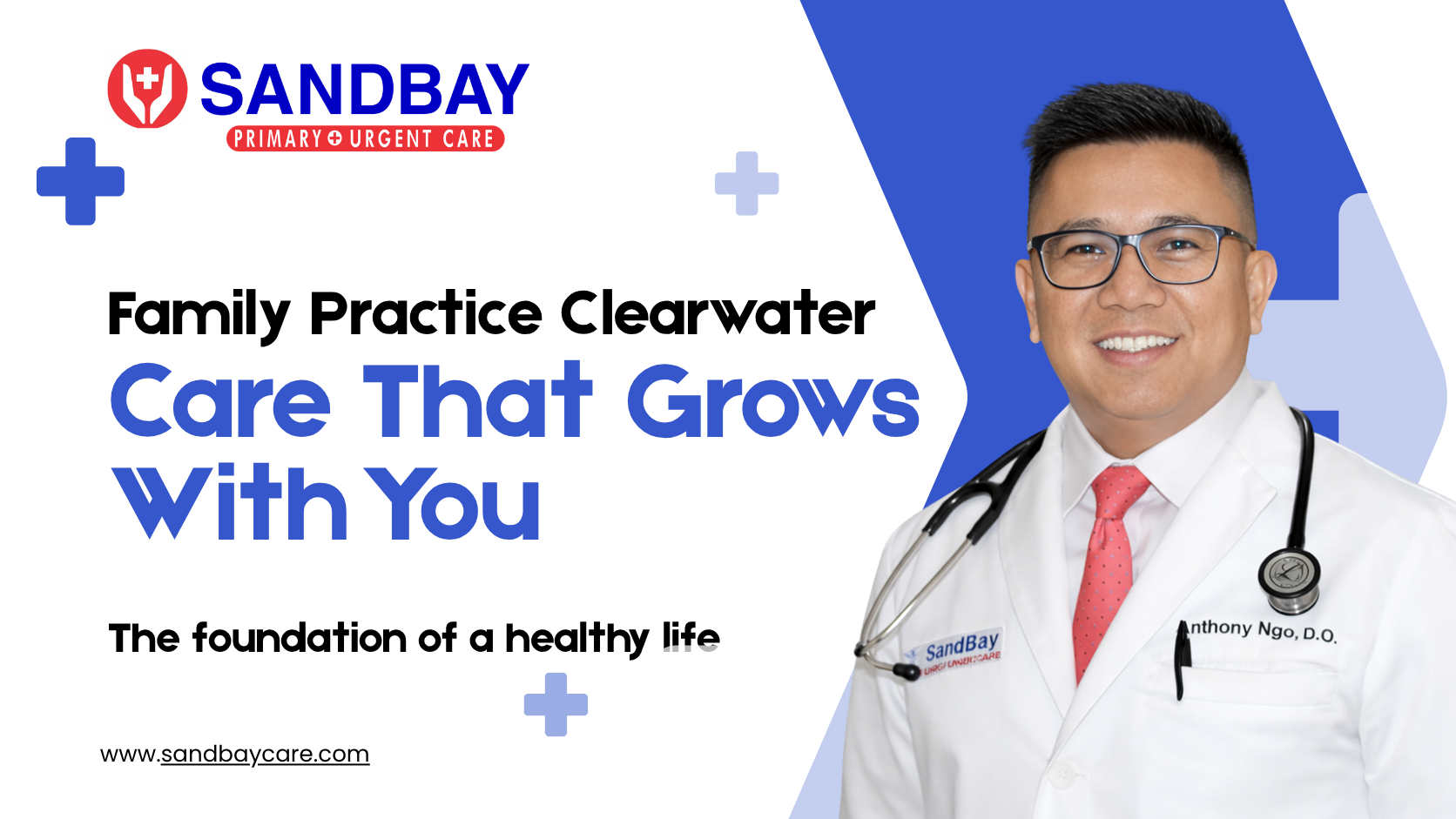
SandBay Care’s medical team includes Board Certified Family Medicine physicians, including Dr. Anthony Ngo, DO, Dr. Bernard Philippe, MD, and Dr. Gilberto Alvarez, MD. The practice describes its approach as convenient, comprehensive, and timely Family and Urgent Care. Sandbay Care

(LINK TRANG TEAM: anchor text “SandBay Care medical team” → Meet the Team page)


Care That Reflects Local Routines and Conditions

Clearwater’s coastal environment and warm weather shape daily life, and they can shape health conversations too.

Sun exposure, hydration, outdoor activity, seasonal allergies, and heat safety may be relevant topics during a visit. Rather than treating these as generic warnings, a clinician can help patients think through practical habits that fit their routines.

For example, a parent may have questions about keeping children hydrated during outdoor activities, while an adult who spends considerable time outdoors may want to discuss sun protection or changes in their health during warmer months.

Local circumstances also affect whether care is easy to access.

A patient may need appointments close to home or work, a convenient location, clear directions for contacting the office, or access to care for both routine and unexpected medical concerns.

These details are not extras. They can influence whether someone seeks help early or delays until a manageable problem becomes harder to address.

When comparing practices, consider both the clinical services and the practical experience of getting care.

For example, patients can review our guide on finding the right local doctor in Clearwater before choosing a healthcare provider.

(LINK BÀI BLOG CŨ: anchor text “finding the right local doctor in Clearwater” → bài “Doctor Near Me in Clearwater: How to Find the Right Local Care”)

A Clearwater family practice should also be prepared to explain how it handles routine visits, urgent concerns, referrals, and test results.

These processes differ between offices, so it is worth asking direct questions instead of assuming every clinic works the same way.


One Familiar Starting Point for Many Needs

Family practice is broad, but it does not mean one clinician provides every kind of care.

A primary care provider may assess common symptoms, manage many ongoing conditions, recommend screenings, and help patients determine whether specialist care may be appropriate.

Their role is often to provide a reliable starting point: someone who can help determine what needs attention, what can be monitored, and which healthcare professional should be involved next.

At SandBay Care, this broader approach is reflected in the combination of Primary Care, Urgent Care, Telemedicine, and In-House Lab Work. The clinic’s listed services include routine checkups, acute illness care, chronic illness management, and several additional medical services. Sandbay Care

Everyday NeedHow a Family Practice May Help
Preventive careReview screenings, vaccines, and personal risk factors
New symptomsAssess concerns and advise on next steps
Ongoing conditionsTrack progress and support a care plan
Routine physicalsProvide annual, school, or sports physicals
TestingCoordinate appropriate testing and follow-up
Urgent concernsHelp determine whether urgent care is appropriate
Specialist careDiscuss referrals and help organize follow-up
Health questionsExplain options and support informed decisions

SandBay Care’s listed services include annual physicals, drug testing, school and sports physicals, STD testing, women’s wellness services, flu shots, in-house laboratory work, and care for a range of acute and chronic conditions. Sandbay Care

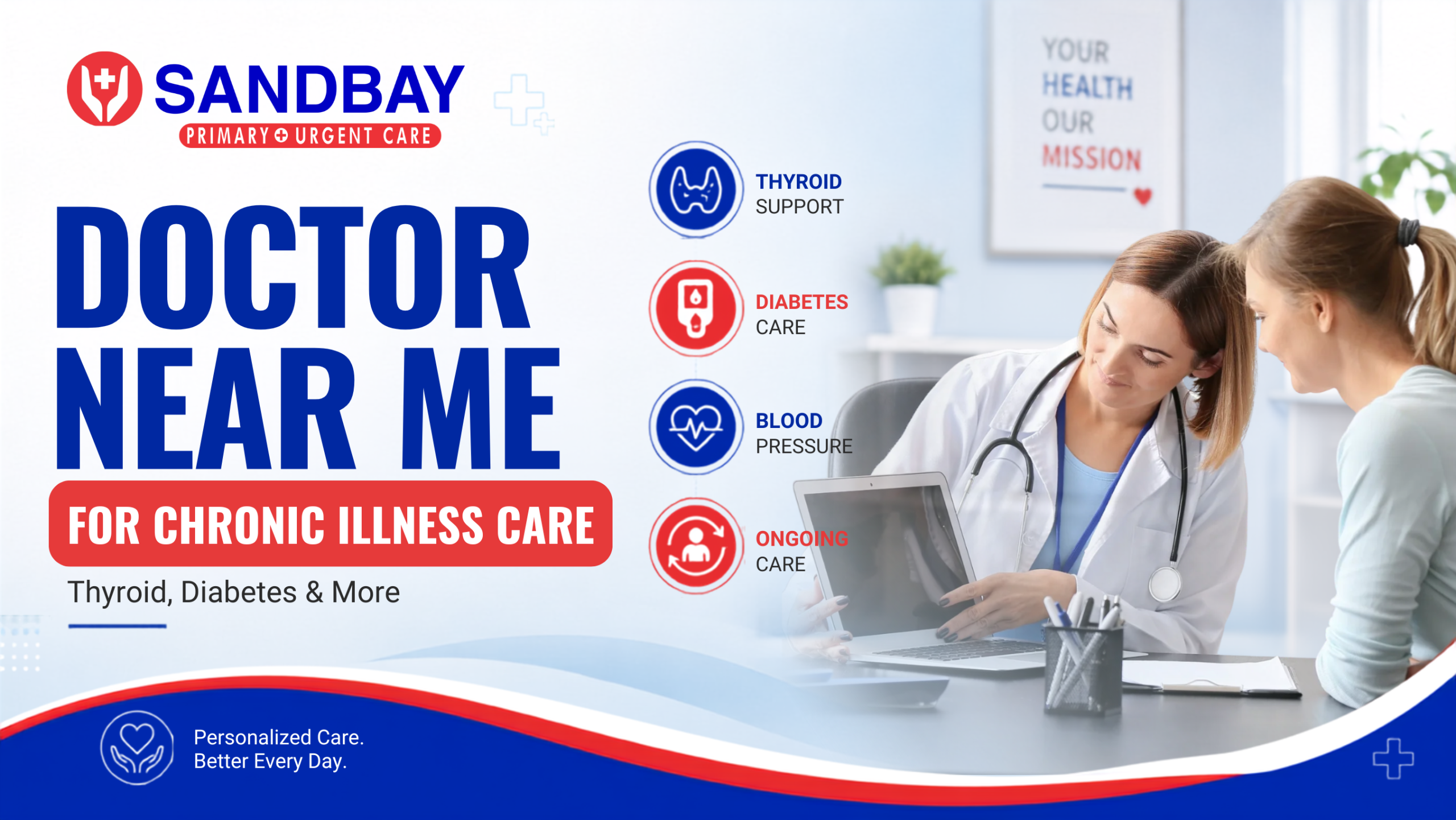
The practice also lists chronic conditions such as diabetes, hypertension, high cholesterol, thyroid disease, COPD/asthma, migraine headaches, PCOS, anxiety, and major depression among the conditions it manages. Sandbay Care

The table is a starting guide, not a promise that every clinic offers identical services. Practices may differ in staffing, equipment, appointment types, insurance participation, and referral arrangements.

Patients should confirm details directly with the office, particularly if they need a specific service or are managing a complex condition.

Thinking of family practice as a home base can help patients use the healthcare system more confidently.

It encourages people to bring questions forward, keep preventive care on the calendar, and seek direction when a concern falls outside their own experience.

For Clearwater households, the value lies not only in convenience but in having a healthcare team that can connect individual health decisions to a wider, evolving picture.


Preventive Care That Supports Every Stage of Life

Preventive care is more than a yearly appointment or a reminder to update a vaccine.

It is a chance to look ahead, review changing risks, and identify practical steps that may support health over time.

A Family Practice Clearwater provider can help patients distinguish between recommendations that apply broadly and those that should be tailored to age, health history, family background, medications, and personal circumstances.

Turning Wellness Visits Into Useful Conversations

A wellness visit works best when it is a conversation rather than a rushed checklist.

Patients can prepare by noting questions, recent changes, medicines they take, and concerns that have been difficult to fit into other appointments.

A brief list on a phone or piece of paper can help keep important topics from being forgotten.

SandBay Care lists annual medical exams among its notable services, giving patients an opportunity to stay current with routine health assessments. Sandbay Care

Preventive guidance is not identical for everyone.

Age, prior results, family history, pregnancy, medications, and chronic conditions can all affect which screenings or immunizations may be appropriate.

Rather than relying solely on a general online schedule, patients should ask their healthcare provider which recommendations apply to them and why.

For additional general information about adult vaccination recommendations, patients can review the CDC’s current adult immunization schedule.

(EXTERNAL LINK: anchor text “CDC Adult Immunization Schedule” → CDC) CDC

This is also an opportunity to discuss everyday habits without expecting perfection.

Sleep, movement, nutrition, tobacco use, stress, and alcohol can affect health, but meaningful changes are often gradual.

A useful plan might begin with one realistic action, such as walking regularly, improving a bedtime routine, or scheduling a follow-up to review blood pressure or another health concern.

Patients are more likely to sustain changes when goals reflect their circumstances rather than an idealized routine.

Good preventive care also includes knowing what has already been done.

Keep a record of major diagnoses, immunizations, screening dates, allergies, and important test results when possible.

If you change practices or see a specialist, having this information available can reduce unnecessary repetition and help the next clinician understand the context.


Building Healthy Routines for Children and Teens

Children’s preventive care includes more than checking height and weight.

Visits may offer a place to talk about development, sleep, nutrition, school adjustment, physical activity, and emotional well-being.

Parents can raise observations that seem small but persistent, such as a child having difficulty sleeping, avoiding activities they once enjoyed, or experiencing changes in school or daily routines.

Early discussion does not automatically mean something is wrong. It gives the family and clinician an opportunity to assess what is happening.

As children grow, their needs and their role in appointments change.

Younger children may rely on a parent to describe symptoms and routines, while adolescents benefit from opportunities to speak directly with a clinician.

Families can support this transition by explaining that healthcare visits are meant to help and by asking the practice how confidentiality is handled for teenagers.

Preventive visits can also make health advice more practical for local life.

For a child who plays outdoors in Florida, discussions might include sun protection, hydration, and recognizing signs of overheating.

For a teenager with a demanding schedule, the focus could be on sleep, safe activity, stress, and maintaining healthy routines.

The aim is not to make family life revolve around health rules.

It is to help young people develop habits they can understand and carry forward.


Preventive Care as a Long-Term Investment

Prevention is most useful when it is connected to follow-through.

A screening result may require another test, a vaccine may need a later dose, or a discussion about a new symptom may lead to monitoring.

Before leaving an appointment, patients can ask what happens next, who will contact them, and when they should seek help if something changes.

These simple questions help convert a conversation into a clear plan.

A family practice can also help patients weigh benefits, limitations, and personal priorities.

No screening or intervention is automatically right for every person at every time. Patients deserve to understand why a recommendation is being made and what the possible next steps could be.

An annual visit should not be treated as the only opportunity to discuss health.

New or worsening symptoms, medication questions, and changes in mental well-being may deserve attention sooner.

At the same time, not every concern requires an emergency visit.

SandBay Care provides both primary care and urgent care, which can give patients different options depending on the type and urgency of a non-emergency medical concern. Sandbay Care

For a more detailed explanation of the difference between walk-in care and urgent care, see:

(LINK BÀI BLOG CŨ: anchor text “walk-in clinic or urgent care” → bài “Is It Better to Go to a Walk-In Clinic or Urgent Care?”)

Severe or life-threatening symptoms require emergency medical attention rather than waiting for a routine appointment.


Choosing a Family Practice in Clearwater

Finding a family practice involves more than comparing office addresses.

The right choice depends on whether a clinic’s care style, communication, availability, and services fit your needs.

A convenient location can be important, but it is only one piece of the experience.

Look Beyond Location and Online Reviews

Online reviews can reveal useful patterns, especially when several patients describe similar experiences.

They may point to recurring concerns about appointment access, communication, or the overall patient experience.

Still, a review cannot tell the full story of a practice.

Use reviews as prompts for questions rather than as a substitute for speaking with the office or confirming the facts that matter to you.

Start with practical needs.

Consider how far the clinic is from home, work, or school; whether its hours fit your schedule; and what transportation or parking is available.

You should also confirm whether the practice accepts your insurance and whether the specific service you need is covered.

SandBay Care lists its Clearwater location at 915 Chestnut St., Clearwater, FL 33756, with a Clearwater phone number of 727-462-0100. Its current posted hours are Monday through Friday, 8:00 AM–12:00 PM and 1:00 PM–5:00 PM, with Saturday and Sunday listed as closed. Sandbay Care

(LINK TRANG CONTACT: anchor text “SandBay Care Clearwater location and contact information” → Contact Page)

SandBay Care also has a second location at 7599 Park Blvd N, #300, Pinellas Park, FL 33781. Sandbay Care

Then look at the care experience.

Ask who you are likely to see for routine visits, how the practice handles follow-up, how referrals work, and how test results are communicated.

These operational details affect everyday care just as much as the medical services listed on a website.


Ask How Communication Works Between Visits

Many healthcare questions arise after an appointment, when a patient is at home trying to follow instructions.

Ask whether the practice uses a patient portal, how messages are handled, and which concerns should be handled by phone instead.

Test-result communication deserves special attention.

Find out how the clinic communicates results and what you should do if you have not heard back within the expected timeframe.

Referrals are another place where clear systems matter.

The family practice may recommend a specialist, but patients might still need to confirm insurance coverage, schedule the visit, and ensure records are transferred.

Ask who is responsible for each step.

Medication processes can also vary.

Ask how early to request a renewal, whether an appointment is needed for certain prescriptions, and how the practice responds when a pharmacy reports a problem.

Understanding these processes in advance can prevent a routine administrative issue from becoming a larger concern.


Make the First Visit More Productive

Before a first appointment, gather information that may help the clinician understand your health.

This might include:

If you do not know every detail, say so rather than guessing.

A medication list can be especially helpful when it includes nonprescription products and supplements.

Think about what you most want from the visit.

If you have several concerns, write them down and identify the one that feels most important or time-sensitive.

You might also describe when a symptom began, what makes it better or worse, and how it affects daily activities.

These observations can be more useful than trying to arrive with a self-diagnosis.

The clinician’s role is to assess the information and help you consider appropriate next steps.

If you are preparing to visit a local doctor for the first time, you can also read our related guide:

(LINK BÀI BLOG CŨ: anchor text “how to prepare for a doctor visit in Clearwater” → bài “Doctor Near Me in Clearwater: How to Find the Right Local Care”)


Making Care Work for the Whole Household

When several people in a household rely on healthcare at the same time, organization becomes part of well-being.

Families may be coordinating checkups, prescriptions, referrals, school schedules, and care for older relatives.

A family practice can support this work, but patients also benefit from routines that keep information clear and protect each person’s privacy and independence.

Keep a Simple Household Health Record

A shared health record does not have to be elaborate.

Families can maintain a secure list of current medications, allergies, major diagnoses, emergency contacts, and important clinician details.

For each person, note key dates such as a recent screening or upcoming follow-up.

This can be especially helpful when one caregiver schedules appointments for others or when an unexpected health question arises during travel.

Keep individual records distinct even if the same clinic cares for several family members.

A household may share an address and insurance plan, but each patient has a separate medical history and privacy rights.

Medication organization deserves particular care.

Write down the name, strength, schedule, and reason for each prescription when that information is available.

Include over-the-counter products, vitamins, and supplements, and update the list when a clinician changes a plan.

Patients should never change or stop a prescribed treatment without appropriate medical guidance.


Coordinate Without Overlooking Individual Needs

Family scheduling can be efficient, but each person deserves attention to their own concerns.

When booking several appointments together, ask whether each visit will have enough time for the issues involved.

A child’s wellness check, an adult’s new symptom, and a discussion of a chronic condition may require different preparation.

Combining visits is convenient only if it does not leave important questions unanswered.

Caregivers should also recognize that family members may have different preferences.

A young adult might want to manage appointments independently, while an older relative may appreciate help organizing transportation or notes.

Ask each person what kind of support they want and what information they are comfortable sharing.

Respecting autonomy helps prevent practical assistance from turning into unwanted control.


Plan for Urgent Concerns and Changing Circumstances

Every family should know how to respond when a health concern appears suddenly.

Ask the family practice which number to call during office hours and what options are available when the clinic is closed.

Understand that some concerns may be appropriate for primary care while others may need urgent care or emergency evaluation.

SandBay Care’s model combines primary care and urgent care, allowing the practice to address both ongoing healthcare needs and many unexpected non-emergency concerns. Its services include care for acute illnesses such as flu, bronchitis, sinus infections, sore throat, urinary tract infections, skin conditions, and several types of minor injuries, along with chronic conditions and routine healthcare services. Sandbay Care

(LINK TRANG SERVICES: anchor text “SandBay Care’s medical services” → Services Page)

If you want to understand more about local walk-in care, you can also read:

(LINK BÀI BLOG CŨ: anchor text “finding a walk-in clinic in Clearwater” → bài “How to Find the Best Walk In Clinic Near Me in Clearwater”)

For families who also live or work around Pinellas Park:

(LINK BÀI BLOG CŨ: anchor text “walk-in clinic care in Pinellas Park” → bài “Walk in Clinic Pinellas Park: A Complete Guide to Fast Care”)

Planning does not eliminate health risks, but it can make it easier to respond calmly when someone feels unwell.

Health needs change.

A new diagnosis, pregnancy, injury, move, or change in caregiving responsibilities may require a different approach to appointments and communication.

That is why the idea behind family practice is not simply to treat today’s problem.

It is to have a healthcare relationship that can adapt as the needs of individuals and families change.


Family Practice Clearwater at SandBay Care

For patients searching for Family Practice Clearwater, SandBay Care provides a combination of primary care and urgent care designed to support different stages of everyday healthcare.

The practice offers primary care at its locations and lists services including telemedicine, in-house laboratory work, annual medical exams, flu shots, routine physicals, acute illness care, and chronic illness management. Sandbay Care

The clinic’s chronic care services include conditions such as diabetes, hypertension, high cholesterol, thyroid disease, COPD/asthma, migraine headache, PCOS, anxiety, and major depression. Its acute care services include concerns such as flu, bronchitis, sinus infection, sore throat, UTI, skin conditions, and certain minor injuries. Sandbay Care

This range of services supports the central idea of this article: healthcare needs do not stay the same forever.

A patient may first visit for an annual physical, later need help managing a chronic condition, and at another point need care for an unexpected illness or minor injury.

Having access to different types of care within one medical organization can make it easier to understand where to begin.

SandBay Care’s team includes Board Certified Family Medicine physicians, including Dr. Anthony Ngo, DO, Dr. Bernard Philippe, MD, and Dr. Gilberto Alvarez, MD. The practice also lists other providers and a local management and support team. Sandbay Care

(LINK TRANG TEAM: anchor text “meet the SandBay Care team” → Meet the Team)

For patients who want to review the full range of available services:

(LINK TRANG SERVICES: anchor text “view SandBay Care services” → Services Page)

For patients who want to ask about appointments, insurance, current hours, or which type of visit may be appropriate:

(LINK TRANG CONTACT: anchor text “contact SandBay Care” → Contact Page)


Conclusion

A strong Family Practice Clearwater option can offer more than a place to book an appointment.

It can provide continuity, preventive guidance, primary care, support for ongoing health concerns, and a reliable starting point when new healthcare questions arise.

The best fit is one that combines appropriate clinical care with practical access, respectful conversations, and understandable follow-up.

SandBay Care’s combination of primary care, urgent care, telemedicine, in-house laboratory services, preventive care, routine physicals, and management of acute and chronic conditions allows the practice to support different types of healthcare needs as they develop. Sandbay Care

By asking about services and communication, preparing for visits, and keeping essential health information organized, individuals and families can make better use of their healthcare relationship.

Health needs will change over time.

That is why good family care should be able to grow with you.

If you are looking for a local Family Practice Clearwater option, learn more about SandBay Care, explore its primary care services, or contact the Clearwater office to discuss your healthcare needs.

Health News